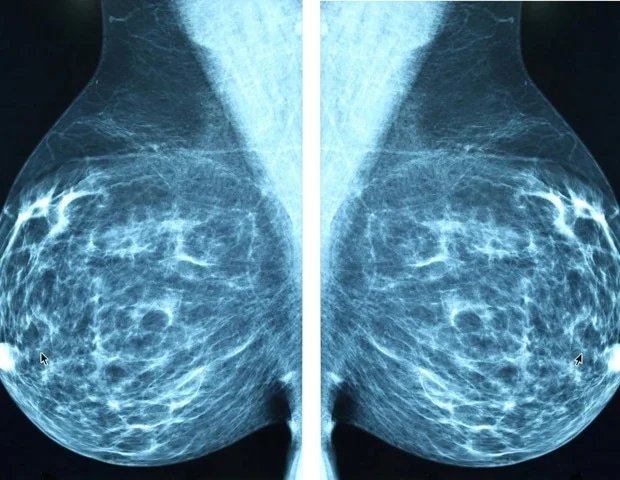
Recent advancements in the medical field have significantly enhanced the ability to detect infections early in patients undergoing reconstructive breast surgeries, a notable concern given that one in eight women will face breast cancer during their lifetime. This innovative approach, developed by researchers at Washington University School of Medicine in St. Louis, provides a promising tool to improve patient outcomes by allowing for preventive treatments prior to the onset of symptoms, thereby reducing the emotional and financial burdens associated with cancer care.
The study, led by Dr. Jeffrey P. Henderson, a professor at the WashU Medicine John T. Milliken Department of Medicine, focuses on the identification of specific biomarkers found in bodily fluids, which can indicate potential infections days or even weeks before clinical symptoms arise. The method represents a significant leap forward from traditional diagnostic techniques that rely heavily on visible symptoms, such as redness and swelling, which can often overlap with normal postoperative reactions and delay timely interventions.
The findings from this research are set to be published in the Journal of Clinical Investigation on February 16, and they underline the potential for a more proactive standard of care that would include molecular signature monitoring to detect infections at an earlier stage.
The capacity to recognize an impending infection through a molecular signature opens up opportunities for ongoing surveillance as part of standard care, allowing for earlier and potentially more effective treatments that could prevent extended treatment cycles or even the failure of reconstructive surgeries.
Dr. Jeffrey P. Henderson, MD, PhD
Advancements Through Metabolomics
The impetus for this groundbreaking study arose from observations made by Dr. Margaret A. Olsen, a retired professor in the Department of Infectious Diseases, who noted alarmingly high infection rates among patients undergoing implant-based breast reconstruction following mastectomy. This observation prompted a collaboration with plastic surgeons at WashU Medicine to develop a straightforward test for infection detection, streamlined into a binary yes/no format.
Utilizing their expertise in metabolomics, which examines small molecules produced or consumed during cellular processes, Henderson and co-author John A. Wildenthal, a MD/PhD student, analyzed postoperative fluid samples from 50 volunteers. The samples included those from women who developed infections and those who did not, allowing researchers to identify metabolite patterns strongly associated with infections that precede clinical symptoms.
The researchers’ analysis highlighted specific metabolites that indicated the likelihood of severe infections requiring aggressive treatment. This methodology could lead to the development of a Point-of-Care test that would streamline postoperative care for breast cancer patients.
If the test yields a positive result, preventive antibiotic treatment could be initiated, significantly reducing the risk of infection. This careful approach also allows for the avoidance of unnecessary antibiotic use in patients who test negative, which is crucial for combatting antibiotic resistance.
The research team plans to conduct further studies to validate these findings before the method is implemented in clinical practice. Ultimately, these broader metabolic insights may enable healthcare professionals to address various postoperative infections more selectively, paving the way for the identification of new therapeutic targets.
“Despite meticulous surgical techniques, infections can still occur,” Dr. Myckatyn emphasized. “Being able to identify biomarkers indicative of infection several days prior to their clinical manifestation is tremendously beneficial.”